
San Francisco’s Hidden 1906 ‘Relief Cottages’ Still Shelter Residents
San Francisco’s tiny “earthquake cottages,” hastily built to shelter refugees after the 1906 earthquake and fire, are still tucked into backyards and side streets across the city, often disguised with
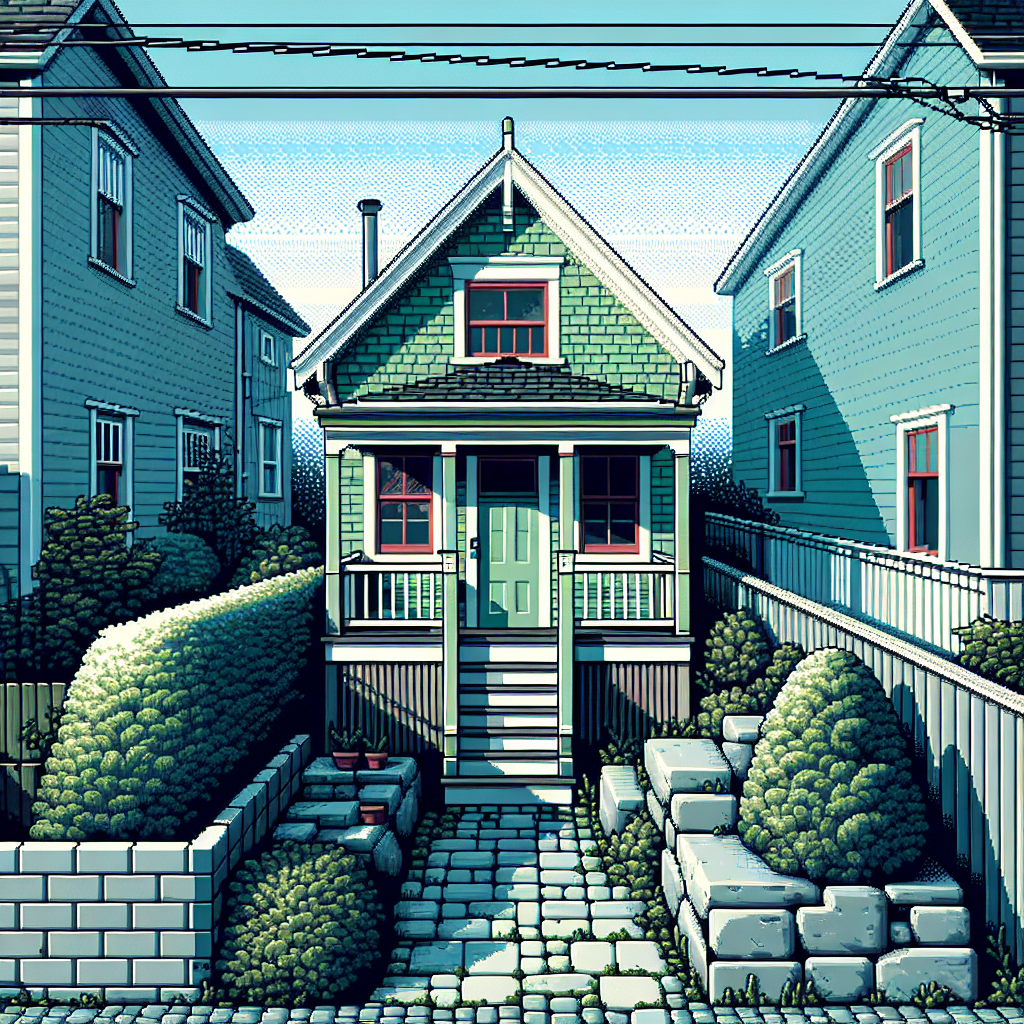
San Francisco’s tiny “earthquake cottages,” hastily built to shelter refugees after the 1906 earthquake and fire, are still tucked into backyards and side streets across the city, often disguised within larger homes and largely unknown even to people who live in them.
The small wood structures, sometimes called “earthquake shacks,” once housed thousands of poor and working class San Franciscans pushed out of downtown rooming houses when the disaster destroyed about 80 percent of the city’s buildings. Today, historians and preservationists say only a fraction remain, and many of those are under pressure from redevelopment.
The modern push to recognize and save these buildings traces back in part to an unlikely tenant in the Sunset District. In 1982, writer and jazz pianist Jane Cryan walked into a leasing agency on Geary Boulevard looking for an apartment big enough for her grand piano. The flat she wanted was gone, but the agent offered a small cottage on 24th Avenue. Cryan took it, treating the place as an artist’s retreat where she could play piano “night and day” without bothering anyone.
An elderly neighbor soon knocked on her door and told her she was “living in a couple of relief houses pasted together.” At that point, despite almost two decades in San Francisco, Cryan said she had never truly learned about the 1906 earthquake and “the fire,” as survivors called it. The comment sent her into newspaper archives, where she spent nights and weekends tracing the story of the cottages and the refugee program that created them.
According to San Francisco Heritage president and CEO Woody LaBounty, more than a quarter of a million people were at least temporarily displaced after the 1906 quake and fires. Those with money left to stay with relatives or friends. Poorer residents, many of them laborers who kept the city running, had nowhere to go. The military first put up large tent camps in city parks. Women cooked on stoves in the street, children went to school in canvas classrooms and people tried to figure out their next move.
City leaders quickly became worried about sanitation and about what would happen when winter rains arrived. The San Francisco Relief Corporation, created to coordinate food, clothing and other aid, launched a housing program built around small wooden cottages. Union carpenters constructed 5,610 shacks in several standard sizes from redwood, fir and cedar. The smallest, known as “Type A,” measured 10 by 14 feet, with larger versions up to 18 by 24 feet.
Officials clustered the cottages in neighborhood parks, including Jefferson Square, Precita Park, Portsmouth Square and a large camp on what is now Park Presidio Boulevard, then mostly empty parkland and sand dunes. The buildings were all painted a distinctive “park bench green,” the same color used on Golden Gate Park benches. According to LaBounty, the program housed around 17,000 people.
The Relief Corporation charged residents a few dollars per month in rent while the cottages sat in the parks. Political leaders, however, were uneasy about giving anything away “for nothing,” LaBounty said, reflecting fears at the time of “creeping socialism.” At the same time, park advocates, including Superintendent of Parks John McLaren, did not want long term refugee villages in public green spaces and pushed to get the camps removed.
Under pressure, the Relief Corporation adopted an incentive approach. When residents bought a parcel of land and moved a shack out of a park, the agency refunded all the rent they had paid. Newspapers later described the strange sight of tiny houses rolling across Van Ness Avenue and Fillmore Street on wagons, with families still inside cooking and doing chores as if the homes were already fixed on permanent foundations.
By the summer of 1907, about a year and a half after the earthquake, most of the park camps were gone. Many cottages migrated to the city’s western neighborhoods, especially the largely undeveloped sand dunes of the Richmond District and the Sunset. Another cluster landed in Bernal Heights, where people moved shacks from Precita Park uphill onto vacant lots.
LaBounty said the program did more than stabilize the labor force needed to rebuild San Francisco. By pairing low cost structures with cheap lots, it “gave people who never would have dreamed of owning a home a chance to get into that American dream.” Refugees who had lost everything could, for roughly the price of a small lot, end up with a simple, nearly free house.
In the years after the disaster, though, having an earthquake cottage carried a stigma. It marked the owner as a former refugee and as poor. According to LaBounty, many people tried to hide the origins of their homes, quickly shingling over the telltale green siding, adding fences and extra rooms, and incorporating the small boxes into larger, more conventional houses. That concealment is one reason historians say it is difficult to know how many cottages survive.
LaBounty now estimates there are between 30 and 50 earthquake cottages scattered around San Francisco. Many are still lived in, like a small house in Bernal Heights where resident Joan Hunter told a KQED reporter that the original one room shack has been expanded into a roughly 620 square foot home for her family. Others sit in backyards as sheds or are fully absorbed into larger structures.
For those trying to spot one on the street, LaBounty said the roofline is the most reliable clue. Earthquake cottages usually have a shallow pitched roof resembling a Boy Scout tent. Other small buildings in the city tend to have steeper or flat roofs. The compact footprint is another sign, although many surviving examples are pairs or trios of shacks joined together, like the 24th Avenue property Cryan rented, which she later learned combined three and a half units, with an additional mid sized shack in the backyard.
As Cryan dug deeper into the history, she also learned about early refugee activists such as Mary Kelly, who challenged how the Relief Corporation distributed aid. Kelly became notorious for refusing to abandon her cottage when officials tried to evict her, reportedly staying inside as men hauled the structure away and dismantled it board by board.
Inspired by stories like Kelly’s and alarmed that her own cottage might be demolished or sold off as a vacant lot, Cryan decided to act. She called City Hall and was routed to the Landmarks Preservation office, where she learned how to apply for historic designation. She compiled her research on the shacks and brought it to the Planning Commission. Local media picked up the story and, in Cryan’s telling, turned her preservation push into a widely followed effort.
Cryan went on to form a nonprofit, The Society for the Preservation and Appreciation of San Francisco Refugee Shacks, to educate the public and advocate for the cottages. Eventually she won landmark status for the 24th Avenue property, which became San Francisco Landmark No. 171. The decision protected the structure but came with a personal cost. To compensate the owner for the new restrictions, the commission also ruled that Cryan had to move out.
After that, Cryan moved from one apartment to another and was eventually priced out of San Francisco after she retired, returning to Wisconsin in 2007 after 44 years in the city. From there she has continued to speak up when developers target known earthquake cottages for demolition.
Other preservation efforts have saved additional shacks. According to LaBounty and local conservation groups, several cottages have been rescued from demolition and relocated. Two are owned by the Presidio Trust and were once open to visitors, although they have since been moved to a more remote location. Another stands inside the San Francisco Zoo as part of an exhibit called Greenie’s Conservation Corner.
For LaBounty and other historians, these structures are more than curiosities. He describes them as a “visual touchstone” to San Francisco’s past and to what he calls the city’s most significant event outside of the Gold Rush. They connect contemporary residents to a moment when tens of thousands of displaced people had to rebuild their lives and the city had to decide how to house and retain the workforce that would reconstruct it.
The cottages also sit in quiet contrast to today’s debates over housing and displacement in San Francisco. More than a century ago, the city backed a program that turned some refugees into first time property owners with small, simple homes on cheap land. Now, as property values rise, many of the remaining shacks are being bought, absorbed into larger remodels or torn down entirely.
For anyone walking through the Richmond, the Sunset, Bernal Heights or older corners of the city, a shallow roof, a small green tinged box behind a fence or a tiny cottage set back from the street may still be one of those original earthquake shacks, hiding in plain sight as one of San Francisco’s most tangible links to 1906.